How does our process work?
From seeding to drying
Seedling & Planting
Ayetu Coffee Company maintains 250 hectares of land where 60% is already planted Arabic coffee. We have planned to dedicate a total of 25 ha for a high conservation value area for forest genetic resources. Ayetu maintains its own seedling production nursery sites where we carefully select seeds from wild-grown mother trees. This allows us to maintain the inherent quality of the coffee and thereby continuing genetic rejuvenation from the wild-grown mother coffee trees. Currently, we are producing 100 – 120 tons of organic coffee per annum from young, high-quality coffee trees. In the future when the farm reaches its full potential we will produce up to 250 tons per annum.
Harvest & Pulping
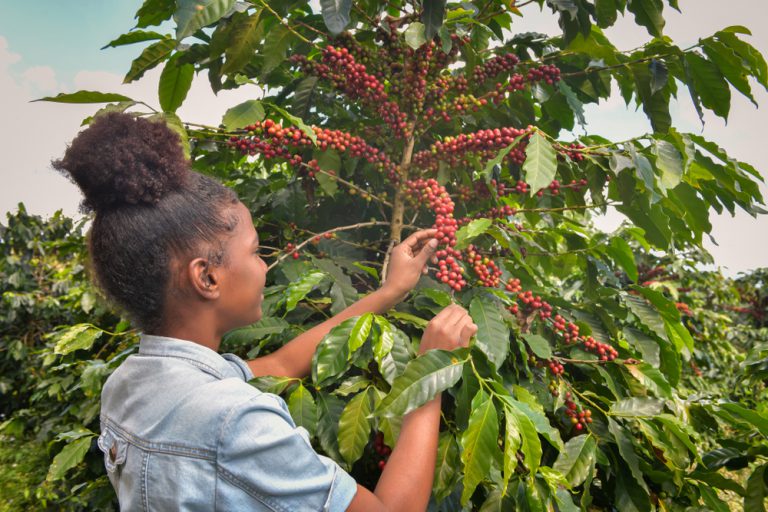
Coffee ripens in several rounds during the harvest season. Coffee on the tree that is harvested is referred to as “Coffee Cherry” due to the red berry-like appearance of the fruit. Once the coffee cherry obtains a red color it is carefully harvested by hand and delivered to the pulp mill facility where the coffee cherry skin and fruit is removed. This typically leaves two coffee beans encased in a parchment skin. This parchment is carefully dried and stored. The coffee cherry skin and fruit are dried and used to make our popular antioxidant-rich wellness beverage.
Dry Mill
Once the parchment has been dried and stored for some time, it is then sent to the dry mill where it is hulled (parchment skin removed), then separated into consistent sizes, and finally graded using a shaker “gravity table” and modern optical sorter. In most cases hulling is done upon our customers’ order. The grading process removes defects naturally occurring in the coffee that might impart off-flavors. Once graded, the coffee is placed in 60kg bags and assigned a quality grade consistent with the green bean standards in Ethiopia.